Famous Japanese Woodblock Prints: Hiroshige, Hokusai, Sharaku and Utamaro
Japanese woodblock prints of the Edo period were cheap, popular pictures made by teams: an artist drew the design, a carver cut it into cherry-wood blocks, a printer laid on the colors one block at a time, and a publisher paid for it all and sold the sheets. A handful of these designs are now among the best-known images in world art. The pages below cover the famous prints and print series that this archive actually holds, almost all of them impressions in the Cleveland Museum of Art, released into the public domain.
Each page explains how the print was made, who or what it shows, why it became famous and what to look for, and says exactly which impression or impressions this archive has. Hokusai's Great Wave is not among them, because the archive does not hold an impression of it, but two of its companions from the same series are here, including Red Fuji.
-
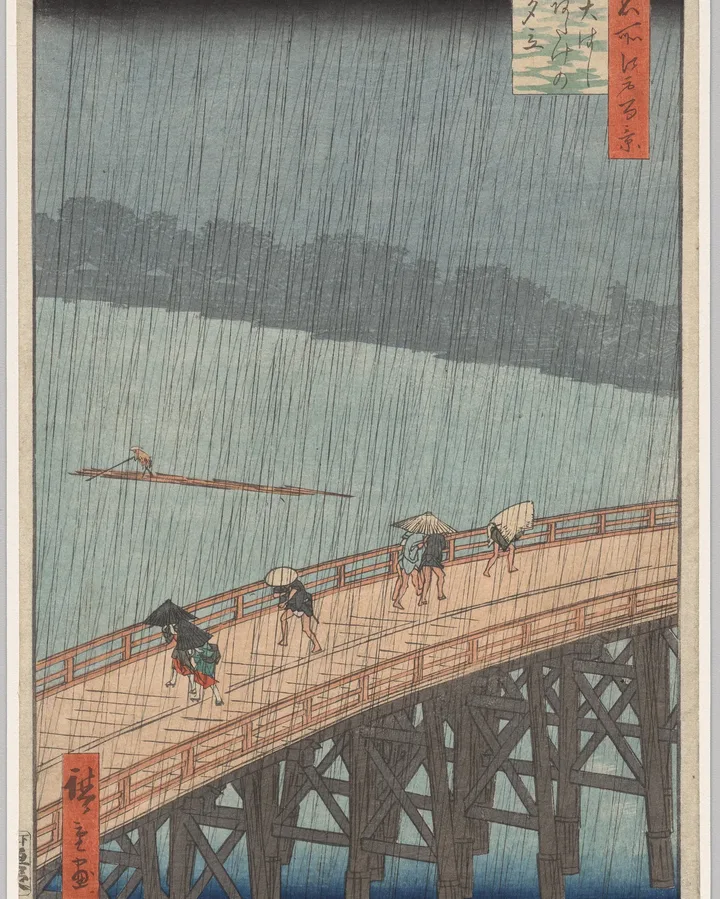
Sudden Shower over Shin-Ōhashi Bridge and Atake (1857)
Utagawa Hiroshige's Sudden Shower over Shin-Ōhashi Bridge and Atake shows people hurrying across a wooden bridge in Edo as a summer downpour sweeps over the Sumida River. Published in 1857 in the series One Hundred Famous Views of Edo, it is one of Hiroshige's best-known prints and the design Vincent van Gogh copied in oil in 1887. This archive holds two Cleveland Museum of Art impressions.
The story behind it → -
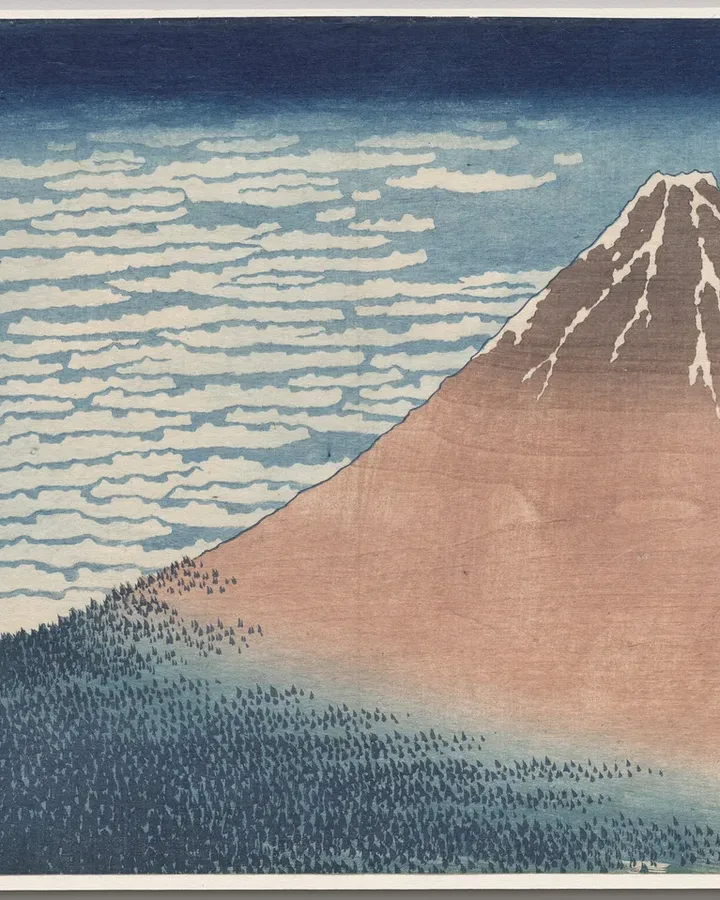
South Wind, Clear Sky (Red Fuji) (c. 1830–32)
Katsushika Hokusai's South Wind, Clear Sky, better known as Red Fuji or Fine Wind, Clear Morning, shows Mount Fuji alone, its slopes turned red under a sky of rippled clouds. Published in the early 1830s in the series Thirty-Six Views of Mount Fuji, it is one of the simplest and most admired Japanese landscape prints. This archive holds the Cleveland Museum of Art's impression.
The story behind it → -
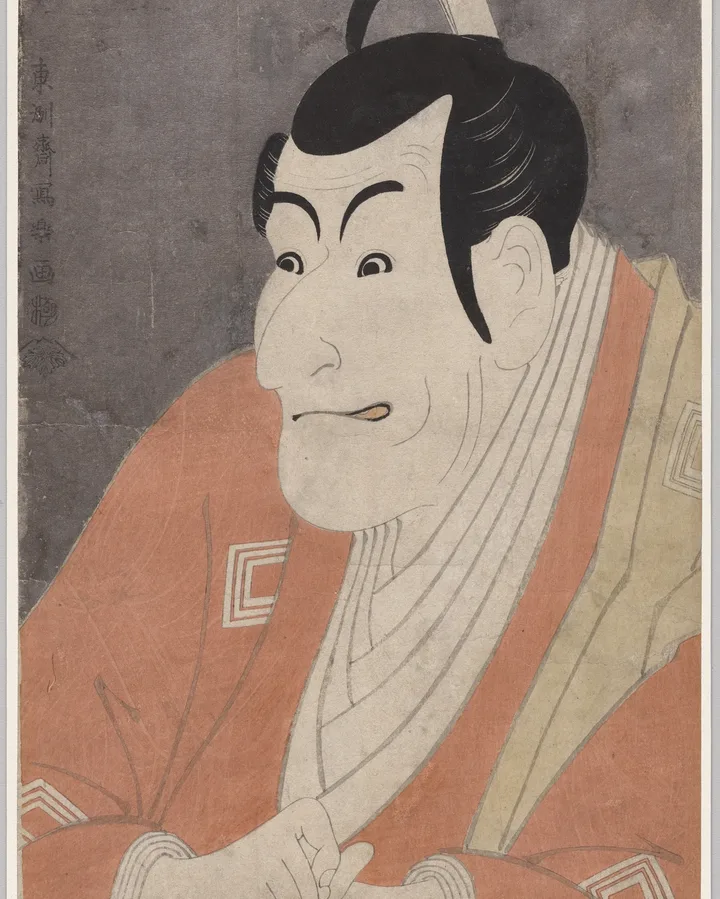
Sharaku's Kabuki Actor Prints (1794) (1794)
Tōshūsai Sharaku is the most mysterious name in Japanese printmaking: an artist active for only about ten months in 1794 and 1795, whose real identity is unknown, and whose close-up portraits of kabuki actors are now among the most admired of all ukiyo-e. This page covers his work through the three Sharaku prints this archive holds, led by his portrait of Ichikawa Ebizō as Takemura Sadanoshin.
The story behind it → -
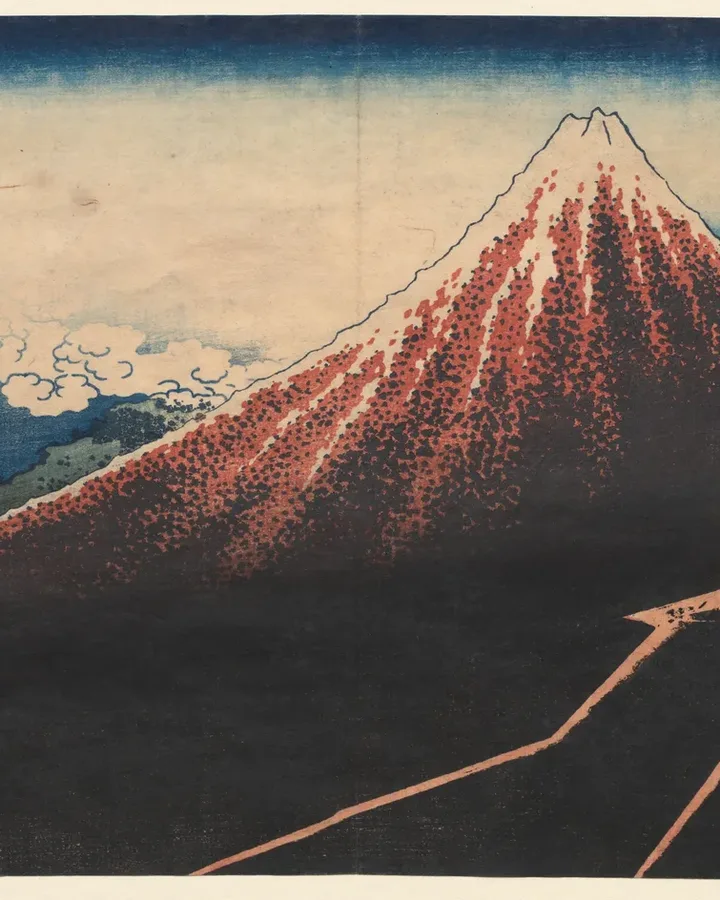
Thirty-Six Views of Mount Fuji (c. 1830–32)
Thirty-Six Views of Mount Fuji is the landscape print series Katsushika Hokusai designed around 1830 to 1832, the set that includes the Great Wave and Red Fuji. It was so successful that ten more views were added. This page is about the series; it is illustrated with Rain Below the Mountain, often called Thunderstorm Beneath the Summit or Black Fuji, and two other Cleveland impressions from the set held in this archive.
The story behind it → -
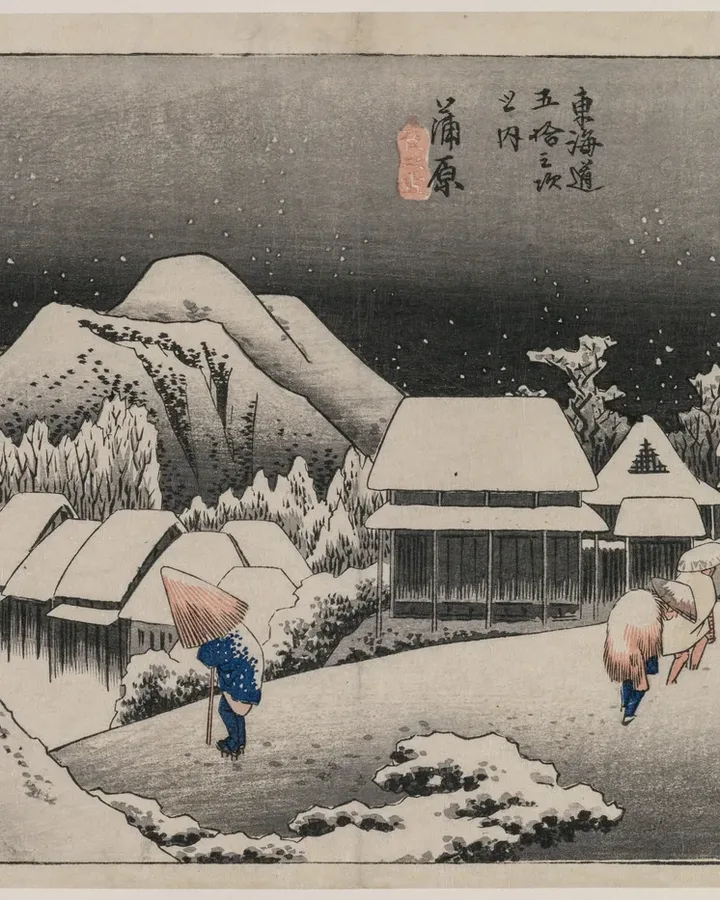
The Fifty-Three Stations of the Tōkaidō (1833–34)
The Fifty-Three Stations of the Tōkaidō is the landscape series that made Utagawa Hiroshige famous: 55 prints of the post towns on the great highway between Edo and Kyoto, published by Hōeidō in about 1833 to 1834. This page is about the series, illustrated with Evening Snow at Kambara and Driving Rain at Shōno, two of its best-known prints, and other Cleveland impressions held in this archive.
The story behind it → -
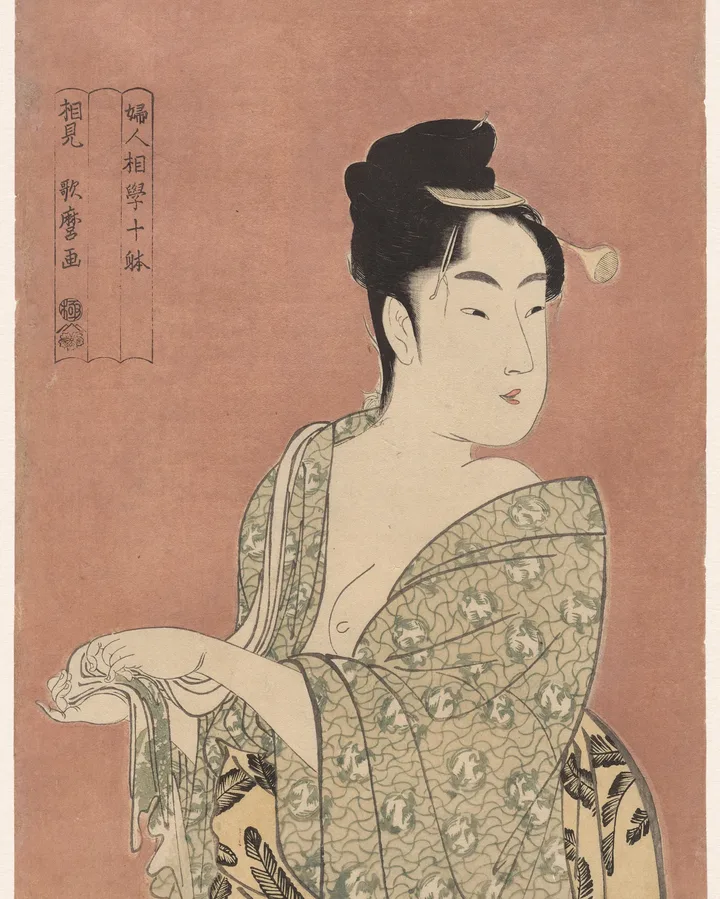
Ten Types in the Physiognomy of Women (The Flirtatious Type) (c. 1792–93)
Kitagawa Utamaro's Ten Types in the Physiognomy of Women, also called Ten Studies in Female Physiognomy, is the series of close-up portraits that made his name in the early 1790s. Its best-known sheet, the Flirtatious Type or Fancy-free Type, shows a woman glancing over her shoulder, her robe slipping off one shoulder. This archive holds the Cleveland Museum of Art's impression, one of only two from the series printed with a pink mica ground.
The story behind it → -
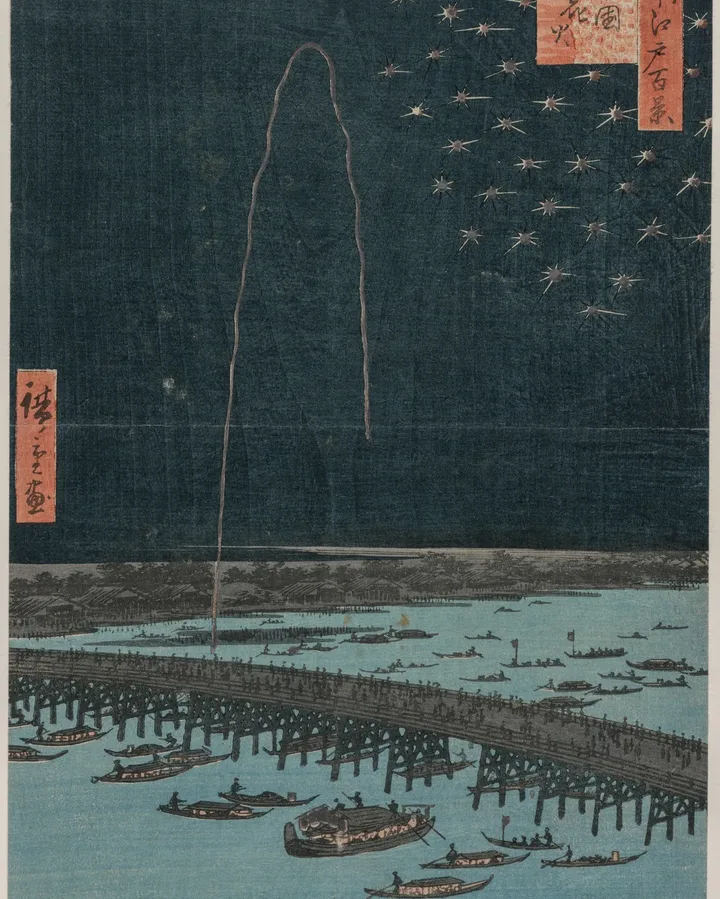
One Hundred Famous Views of Edo (1856–59)
One Hundred Famous Views of Edo was Utagawa Hiroshige's last great series: 119 vertical prints of the city now called Tokyo, published from 1856 to 1859 and completed after his death by Hiroshige II. This page is about the series, illustrated with Fireworks at Ryōgoku and three other Cleveland impressions held in this archive. Its most famous print, Sudden Shower over Shin-Ōhashi Bridge and Atake, has its own page.
The story behind it →